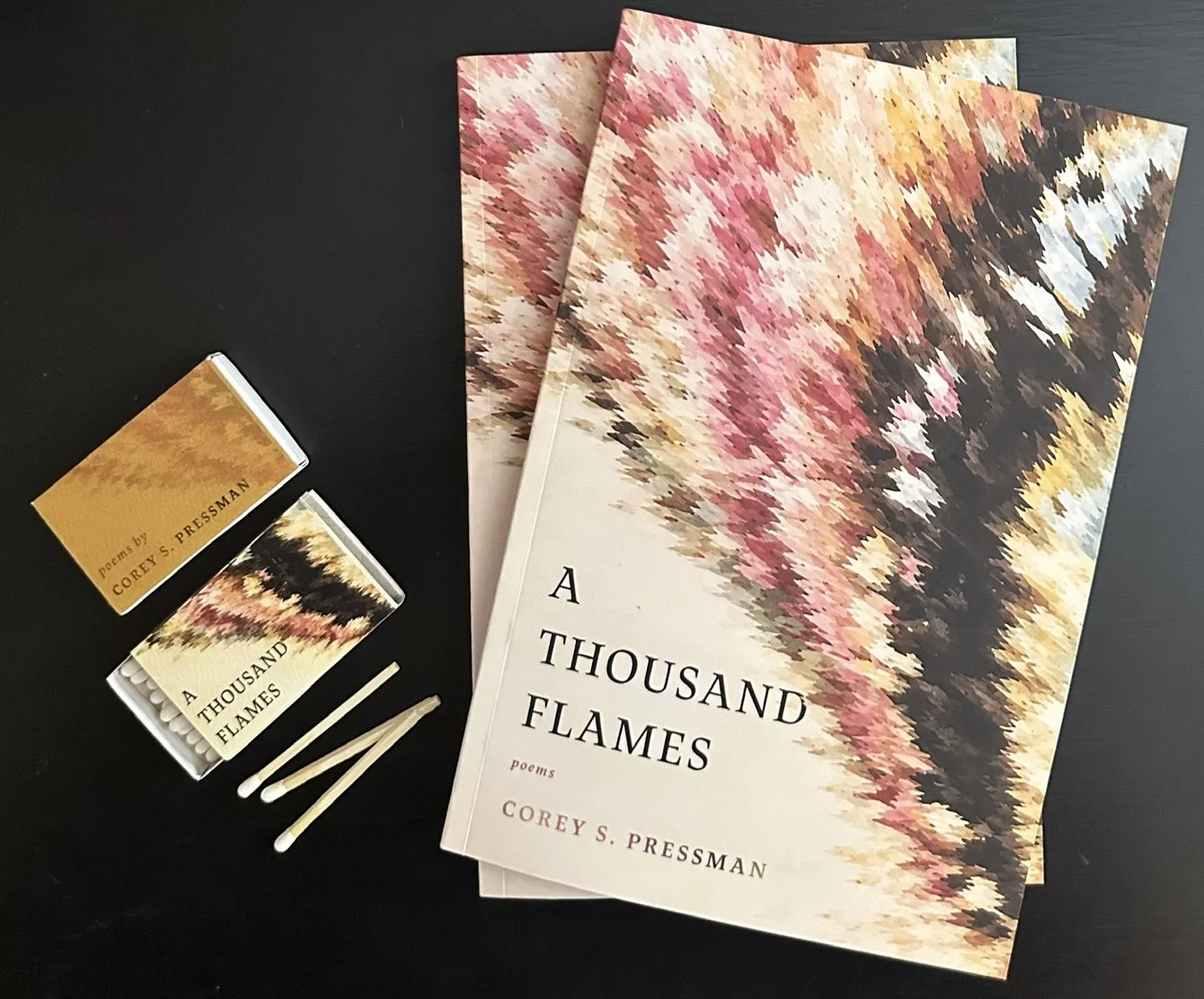
Verdant Publishing, an imprint of The Verdancy Project recently published A Thousand Flames, the debut poetry collection from Corey S. Pressman. We interviewed Corey to learn more about him and his poetry. We hope you enjoy.
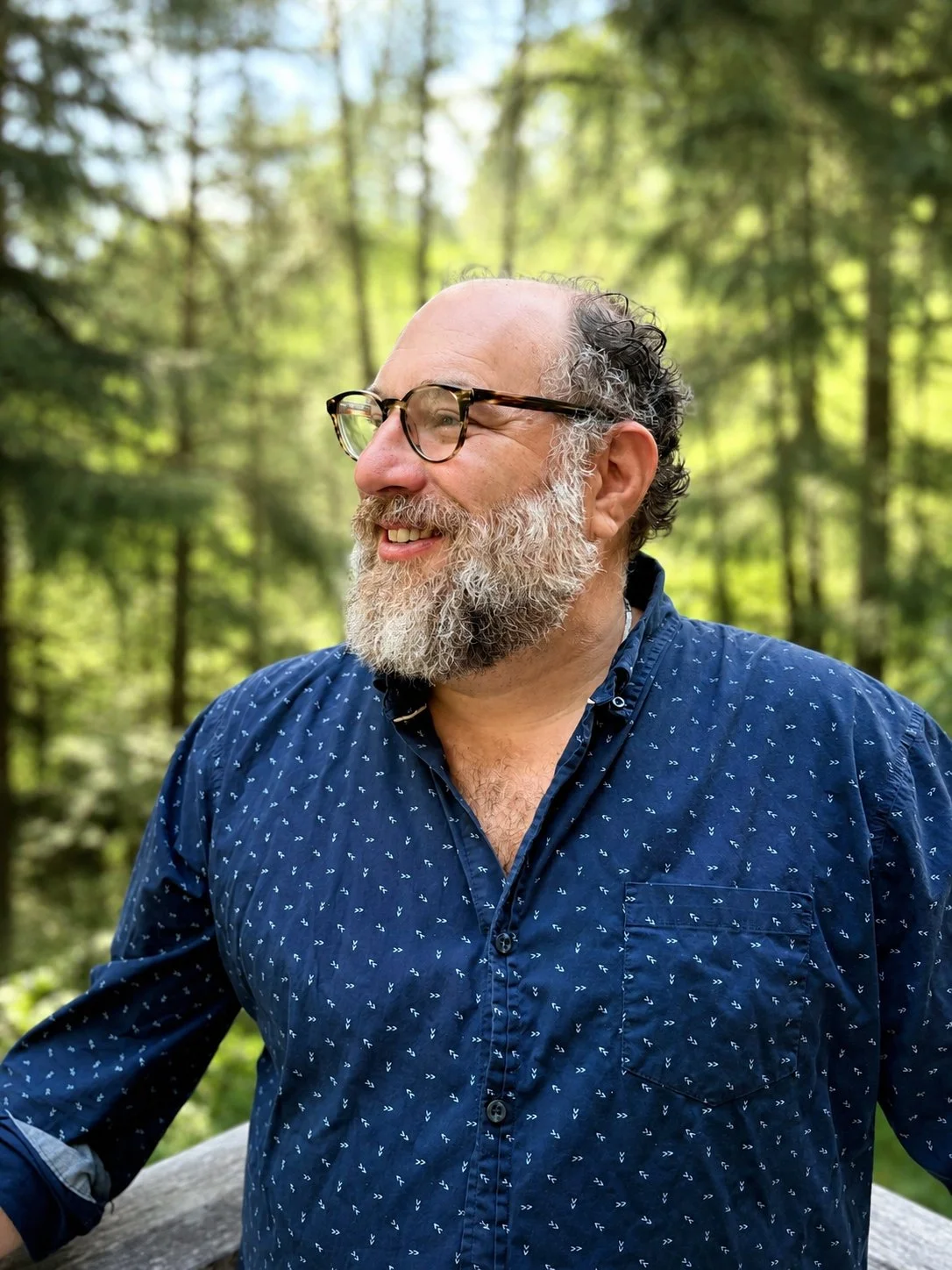
This debut collection spans poems written across several decades. What was it like revisiting your older work, and how did you decide which pieces belonged together in these twelve sections?
I approach older work with curiosity. I'm always eager to see which pieces were bound to the circumstances in which they were written and which carry something more. The older poems that made it into this collection are the ones that remain charged and true despite the passage of time. That, ultimately, is the test for everything in the book: whatever has spark is potentially worth sharing. These are the poems that are at once personal and, I hope, universal.
Most of the poems fall into a few broad categories: time, place, longing, love-joy, and transcendence. Each of the twelve sections contains roughly one poem from each. I wanted each section to be a small version of the whole book, so the reader cycles through these themes again and again.
Your poems shift from modern settings like Mill Valley to the ancient town of Çatalhöyük. What draws you to connect modern personal experiences with deeply historical or archaeological spaces?
These poems come from direct experience as much as from imagination, and they often arrive all at once; a poem might happen while I'm sitting in a Mill Valley backyard. But I also read and think a great deal about ancient civilizations. I'm drawn to the immensity of time, the inevitability of change, and the surprising continuities. What connects the two is daily life. A backyard afternoon and a morning in a Neolithic house are, to me, the same pattern at different scales.
"Çatalhöyük" came after I read an archaeology paper about that site, one of the oldest known towns, occupied for well over a thousand years some nine millennia ago. The paper described how researchers reconstruct everyday life there, and it mentioned visual motifs that some see echoed in kilim designs still woven today. Reading it brought an immediate vision of the fractal nature of humanity: centuries of ordinary days, and the perpetual, rolling pattern of staying and changing. There is, and always has been, magic in the mundane.
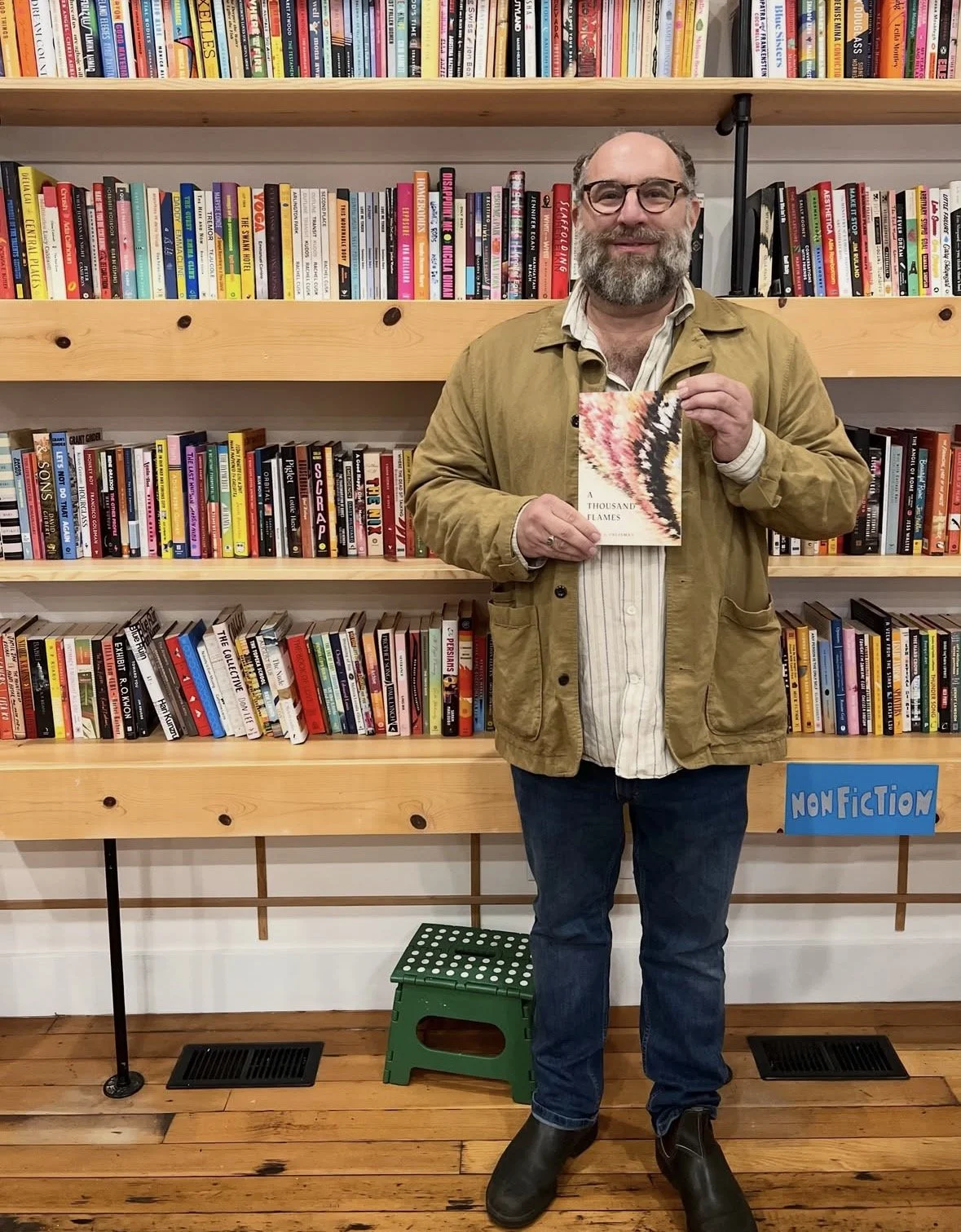
A Thousand Flames explores what we keep versus what slips past us. How do you decide which memories are fleeting and which ones demand to be preserved in a poem?
I don't really decide. My process is more receptive than deliberate. I don't sit down at specific intervals intending to write poems; instead, they begin to bubble up, and what surfaces is what makes it to the page. Some experiences take on a dimension deeper than memory. Usually, images, phrases, and connections arrive and won’t go away. Sometimes this happens in real time as I’m experiencing something; that’s true of many of the “place poems” in this collection. Once that happens, I know I need to get out the notebook, pay attention, and work out the words.
Poetry is unique because you can read one poem or a whole section in a single sitting. How do you recommend readers approach this book—front-to-back, or by dipping in and out?
Read it however your fancy strikes. That said, it might be fruitful to take it one section at a time, in no particular order. Since each section holds a poem from each of the book's main threads (time, place, longing, love-joy, and transcendence), any single section offers the whole range in miniature. I should confess, though, that I read every book of poetry I own in completely random order. Then I start dog-earing pages and writing in the margins, and those are the poems I find myself returning to again and again. In fact, even after years of reading, I still haven't read every poem in my favorite poetry book of all time, Pattiann Rogers's Firekeeper. The ones I treasure keep calling me back. What an embarrassment of riches!
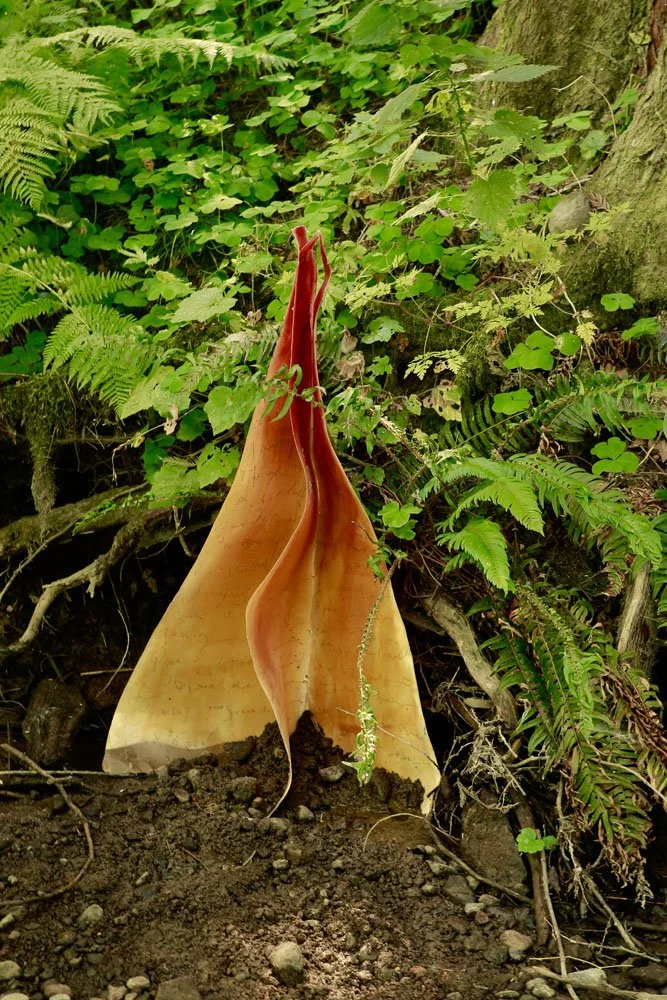
As a visual artist who works with natural pigments and beeswax, how does your tactile relationship with physical mediums influence the imagery and structure of your poems?
My waxed-powder paintings are made with mineral pigments and beeswax on paper, and the materials have their own will. Over the years I've learned to work with the materials rather than impose a predetermined outcome on them, and I now approach language the same way. A poem, like a painting, tells me what it wants to become if I pay close enough attention. The skill is in being a good partner to the arriving work less so than an authoritative creator.
Painting keeps me aesthetically attuned. It demands a reliable practice of attention, presence, and openness. Even its frustrations are instructive. I don't think I could write the poems I'm writing now without what painting has taught me.
Now that A Thousand Flames is out in the world, are there new themes, visual art projects, or writing directions you are excited to explore next?
The wheel keeps turning! The poems keep arriving the way they always have, and I'm sending work out for publication and steadily accumulating enough for what I hope will be a second book. I have a few art shows on the horizon, along with workshops. I'm particularly excited to return to the Sitka Center for Art and Ecology and to Esalen Institute next summer. I'm also working with Arizona State University's Center for Science and the Imagination on a workbook about art making. And I've been publishing memoir stories, one by one, from a larger collection that I'm now considering bringing to a publisher. Otherwise, I'll keep letting the wheel turn and see where it takes me.